


Nobody Told You Your 20s Weren’t Supposed to Look Like This

It’s 11.47pm and you’re three minutes into a scroll that was supposed to last thirty seconds. Someone from sixth form just got engaged. Someone else has posted a mortgage offer letter with a party popper emoji. A third person, who you’re fairly sure once failed a driving test in a Tesco car park, is now Head of Something at a company you’ve never heard of but sounds important.
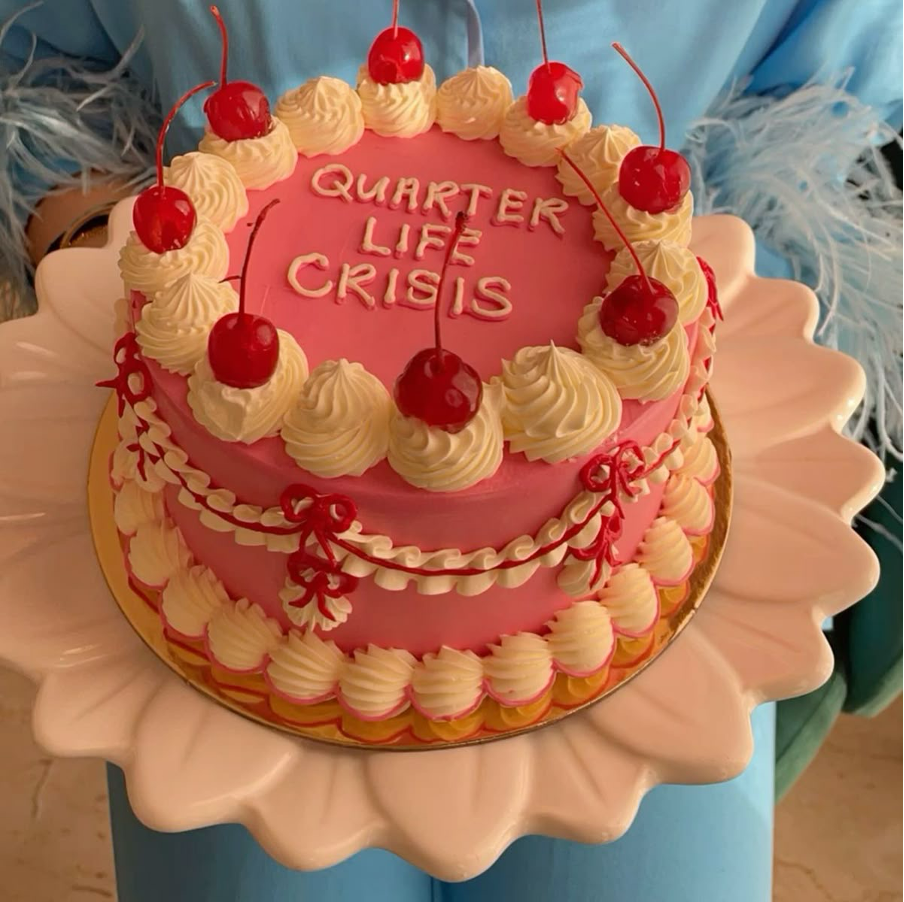
You put the phone down. You do not feel calm.
If this sounds familiar, you’re not imagining the pressure, and you’re certainly not alone in feeling it.
Psychologists have a name for it now: the quarter-life crisis. It isn’t a clinical diagnosis, but it is a well-documented phenomenon, and a global study of more than 6,000 young adults across the UK, the US, Australia and India found that three-quarters of them had experienced one. So if you feel like you’re the only person still figuring things out, the maths says otherwise.
What “having it together” actually means
Ask someone to describe a sorted 20-something and you’ll usually get the same shortlist: a steady career, a long-term partner, a place of your own, some savings, maybe a dog. It’s less a personal ambition than a cultural script, one most of us absorbed without ever agreeing to it.
The trouble is that script was written for a different economy.
The maths bit nobody mentions
Here’s where it gets interesting, because the numbers tell a much less flattering story about the checklist than the checklist itself does.
In the mid-1970s, the average age for a first marriage in England and Wales was 22.8 for women and 25.1 for men. Ninety-one per cent of women were married by the time they turned 30. Fast forward to today and that figure has collapsed to around a third, while the average age at first marriage has climbed past 31 for women and 33 for men.
Housing tells the same story. Data from Skipton Building Society shows the average age of a first-time buyer in the UK has risen from 29 in the mid-1990s to roughly 34 today, with deposits now averaging over £60,000. Buying a home used to be something you did in your twenties. Now it’s something you do, on average, well into your thirties, if you manage it at all.

None of this means your twenties are going worse than your parents’ did. It means you’re trying to hit their milestones on a track that’s been quietly moved further down the road.
Social media didn’t invent comparison, but it did weaponise it
Comparing yourself to your peers isn’t new. What’s new is having a live, curated feed of everyone else’s highlight reel available at 2am, algorithmically sorted to show you the best version of everyone else’s life at the exact moment you’re lying in bed with your own.
Research on social media and early adulthood consistently links heavier use to greater social comparison and lower satisfaction with your own progress. That tracks with something most of us already know instinctively: nobody posts the rejected job application, the argument with their landlord, or the Wednesday they spent crying in the work toilets. You’re not comparing your life to their life. You’re comparing your Wednesday to their highlight reel, and one of those things was never a fair fight.
Why it’s genuinely harder to “start early” now
This is the part that rarely gets said out loud: it isn’t just that milestones feel further away. Structurally, they are further away, and the reasons go back further than Instagram.
A few generations ago, most people left education in their teens and went straight into work, often the same job, sometimes the same employer, for decades. There was one clear runway, and it was short.
Since then, three things have shifted the entire timeline:
Education got longer. University attendance has expanded hugely since the 1970s, which is a good thing in plenty of ways, but it also pushed the average age of financial independence back by several years compared with previous generations.
Jobs stopped being for life. The steady, single-employer career common to the postwar decades has largely given way to a labour market built around shorter contracts, career switching and constant reskilling, which is more flexible but also less predictable.
The cost of “settling down” outpaced wages. House prices and rents have grown dramatically faster than earnings over the past fifty years, meaning the traditional markers of adulthood now require a much bigger financial run-up than they used to.
Put those together and you get a generation doing everything roughly on schedule, studying, working, saving, and still arriving at the old milestones years later than their parents did. That’s not a personal failing. That’s arithmetic.
So what do you actually do with this?
Not a five-step plan to “fix” your twenties. If anything, the more useful move is to retire the checklist itself.
The idea that a good life has a fixed shape by a fixed age is a relatively recent invention, tied to a specific economic moment that no longer exists. Your twenties were never meant to be a countdown. They’re closer to a first draft: messy, non-linear, and largely unfilmed for other people’s feeds, which is exactly as it should be.
The people whose lives look sorted online are not, in fact, sorted. They’re edited. Yours doesn’t need to be either.


Comments