


The Lost Era of Yassified Medieval Movies

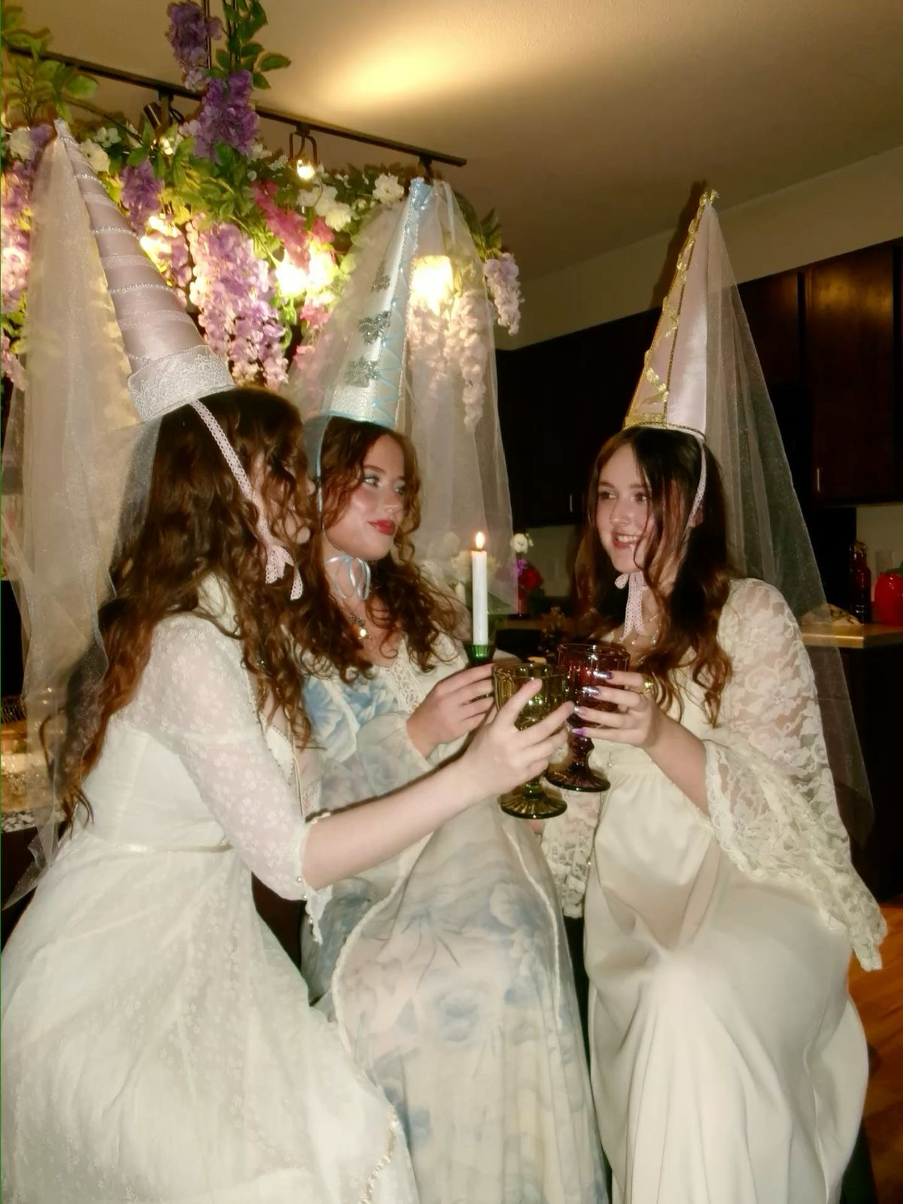
There was a brief, glorious window, roughly 1995 to 2004, when Hollywood decided the Middle Ages didn’t need to be grim. No mud-caked realism, no muted colour palettes, no dragons brooding in the rain. Instead we got glitter eyeshadow under coronets, jousting tournaments soundtracked by classic rock, and castles that looked like they’d been decorated by a teenager with a Claire’s Accessories card. Call it yassified medieval cinema: a genre that took the trappings of chivalry and ran them through the aesthetic of a Delia’s catalogue.
It has been out of fashion for two decades. It is coming back. And it deserves a proper look at why.

What “Yassified Medieval” Actually Means
The term gets thrown around loosely, but the films that earn it share a few specific ingredients. They are set somewhere between the sixth and fourteenth centuries, historically speaking, and they could not care less about historical accuracy. Colour is the point, not an accident: jewel-toned gowns, gold accents, hair that would never have survived a day without modern styling tools. And crucially, the soundtrack usually has nothing to do with the era on screen. Queen, David Bowie and Elton John do a lot of heavy lifting in this genre, standing in for lute music that would have alienated a modern audience in about four seconds.
None of this was an accident or a budget shortcut. Directors of the era were explicit about the choice. When A Knight’s Tale filled its fourteenth-century jousting arena with the crowd doing the stomp-stomp-clap of “We Will Rock You,” director Brian Helgeland pointed out that a full orchestral score would have been just as historically inaccurate, since orchestras didn’t exist yet either. Once you accept that any music choice is a fabrication, you may as well pick the one that makes the audience feel something.
The Holy Trinity
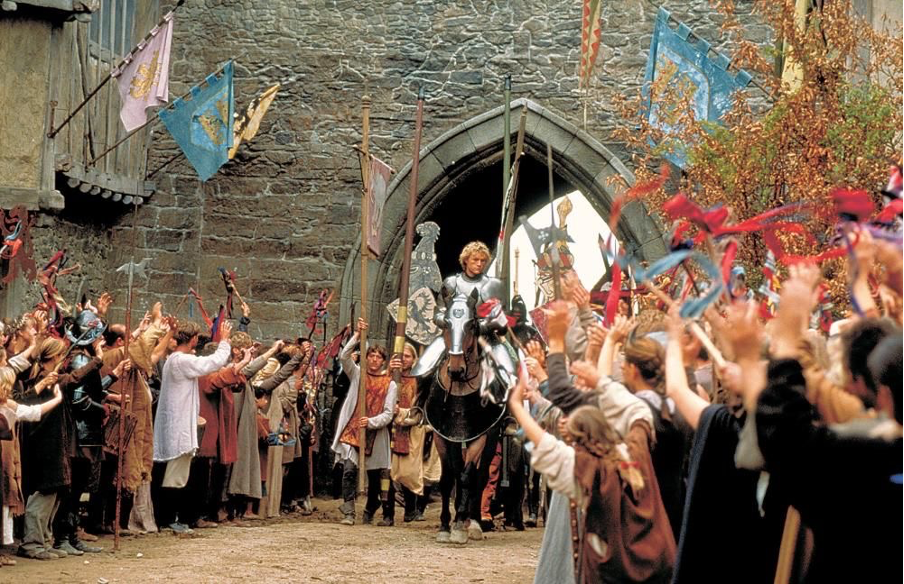
A Knight’s Tale (2001)
Heath Ledger plays a peasant squire who forges his lineage and jousts his way into the nobility, with Paul Bettany as a broke, charismatic Geoffrey Chaucer following him around like a hype man. The anachronisms are gleeful rather than accidental: a Nike logo hand-painted onto armour, punk hairstyles on the ladies of the court, a matte-painted London Eye visible in one background shot. Critics were mixed on release, but the soundtrack became a genuine hit in its own right, and the film has aged into a comfort watch that people return to specifically for its refusal to take itself seriously.

Ella Enchanted (2004)
Anne Hathaway stars as Ella, cursed at birth with the “gift” of total obedience, in a jukebox musical fairy tale that spoofs Cinderella more than it retells it. Hathaway did her own singing, including a rendition of Queen’s “Somebody to Love” that was reportedly a last-minute swap after the filmmakers realised she had no chemistry with the more traditional fairy-tale song they’d originally chosen. It flopped at the box office. It has since become a cult favourite, largely because of exactly the things critics dinged it for at the time: the wooden hand-cranked escalators, the modern-day mall energy dropped into a medieval kingdom, the sheer commitment to bit.

A Kid in King Arthur’s Court (1995)
The campiest entry of the three, and the one with the best trivia footnote: a pre-Bond Daniel Craig and a pre-Titanic Kate Winslet both appear in supporting roles. A Little League player falls through an earthquake crack and lands in Camelot with a Swiss Army knife and a CD player, which is about as concise a summary of the whole genre as you’ll find. It is unapologetically a kids’ film, but it captures the aesthetic’s core belief that medieval and modern can sit in the same frame without apology.
Why It Worked
The Y2K medieval aesthetic wasn’t just a costuming choice, it was a genuine cultural mood.

The turn of the millennium was equal parts optimistic and anxious about the future, and the fashion of the era reflected that push and pull: metallics and crochet and sheer fabric layered over silhouettes borrowed from the fourteenth century. Filmmakers were doing the same thing narratively, taking a period defined by rigid hierarchy and superstition and filling it with modern confidence, modern humour and modern needle-drops.
It also let these films have their message and mock it too. Ella Enchanted is, underneath the singing ogres, a story about a girl fighting her way out of enforced obedience. A Knight’s Tale is a story about a working-class man refusing to accept the class he was born into. The camp wasn’t hiding the substance, it was the delivery mechanism for it.

Why We Need It Back
The aesthetic never really left, it just went quiet for a while. It has spent the last two years quietly resurfacing on TikTok, where a new generation is rediscovering corset tops, chainmail-adjacent jewellery and the specific joy of watching Heath Ledger get away with a Nike logo in the fourteenth century. The wider Y2K fashion revival was always going to drag its medieval cousin along eventually.
What’s missing is the film industry catching up. Modern medieval and fantasy cinema has swung hard toward the muted, the muddy and the self-serious, as though colour and a good pop song are somehow incompatible with a story about knights. The genre could use a reminder that armour looks better with a bit of shine on it, and that nobody has ever regretted a jousting scene set to “We Will Rock You.”
Bring back the glitter. Bring back the anachronistic soundtrack. History was never going to be accurate on screen anyway, so it might as well be fun.


Comments