


Why Your Wardrobe Never Feels Finished (And Who’s Profiting From That)

There is a very specific kind of guilt that comes from opening a wardrobe stuffed with clothes and still feeling like you have nothing to wear. If that sounds familiar, you are not imagining it, and you are certainly not alone. One in three young women in the UK now consider an item of clothing “old” after wearing it just once or twice. Worn twice. Then binned, donated, or left to fossilise at the back of a drawer.
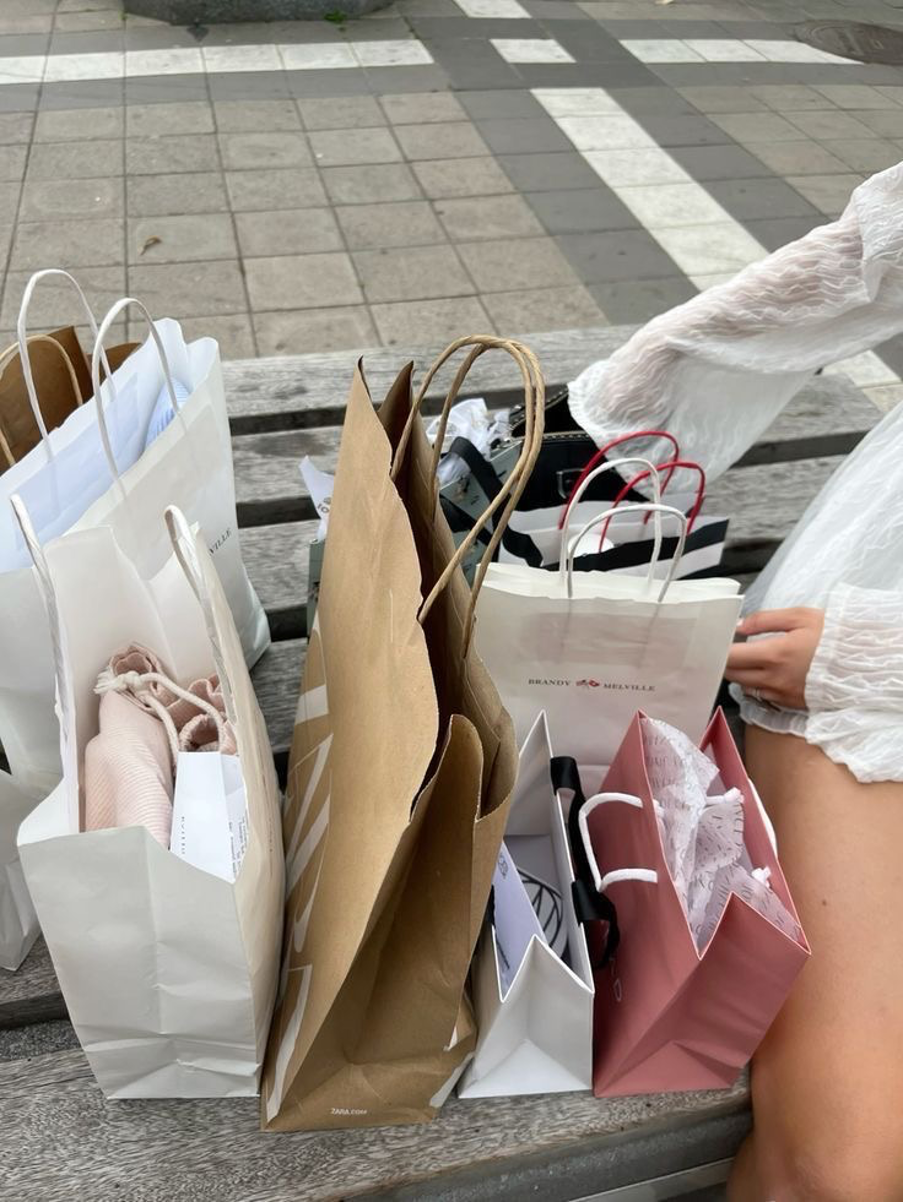
This is not a personal failing. It is the entirely predictable result of a system engineered to make you feel that way, and it is worth understanding exactly how it works, because once you see the mechanics, it becomes a lot easier to opt out.
How trends got this fast
Fashion has always moved in cycles, but the cycle used to have a rhythm you could actually keep up with. Two seasons a year, dictated by runway shows, filtering down to the high street over months. Zara changed that in the 1990s by cutting the gap between design and shop floor to a matter of weeks. Then social media arrived and cut it again, this time down to days.
The result is the microtrend: a style, colour or item that rockets to popularity and vanishes within weeks rather than years. Crochet everything one summer, “clean girl” the next, coquette bows after that. Where once a trend cycle had five recognisable stages, rising and falling over a season or two, TikTok can now compress the entire arc into a single fortnight. Ultra-fast retailers have built entire business models around reacting to this speed, with some adding thousands of new items to their sites every single day.

The maths only works because the clothes themselves are cheap and quick to make, which means quality is often the first casualty. Nobody expects a £12 top built around a fifteen-second video trend to last five years, and it usually doesn’t.
The psychology behind the churn
It would be easy to blame this entirely on greedy brands, but the more interesting story is what is happening in our heads while we scroll.
Social platforms are built to surface whatever gets the most engagement, and outfits or aesthetics that look distinctive and shareable do exactly that. Every time an aesthetic like “coastal grandmother” or “dark academia” takes off, it comes with an unspoken checklist of things you apparently need to own to participate. Psychologists studying this pattern point to something researchers have called “market competitive identity development”: rather than building a personal style over years, we are encouraged to buy a ready-made identity in real time, then trade it in for the next one a few weeks later.
Add in the illusion of affordability (fast fashion is priced precisely low enough to feel disposable) and the constant, low-grade fear of being the one still wearing last month’s aesthetic, and you have a genuinely difficult psychological pull to resist. It is worth saying plainly: feeling swept up in this is a completely normal response to a system designed to produce exactly that feeling.
It’s not just clothes
The same pattern has crept firmly into beauty. The “Sephora kids” phenomenon, tweens and even younger children spending hundreds of pounds on skincare and make-up because they have seen it in a “get ready with me” video, is really the same trend cycle wearing a different outfit. Dr Meghan Owenz, a psychologist at Penn State University, has pointed out that this kind of exposure can affect a young person’s sense of self-worth at exactly the age when peer comparison matters most.

The financial reality backs this up. Consumers now buy roughly 60% more clothing items than they did in the year 2000, yet keep each item for around half as long. In the UK alone, an estimated £30 billion of barely-worn clothing sits unused in people’s homes. None of this is really about needing more things. It is about the gap between what we own and what we are told, on a loop, that we still need.
How to actually step off the wheel
None of this requires swearing off fashion or beauty entirely, and nobody is asking you to. It is simply about shifting from reactive buying to intentional buying.
• Wait out the first fortnight. Most microtrends peak and start declining within a few weeks. If you still want something after that window, it is a preference rather than a reflex.
• Work out cost per wear before you buy. A £60 jacket worn fifty times costs £1.20 a wear. A £15 top worn twice costs £7.50. The cheaper item is often the worse investment.
• Build around a personal uniform, not an aesthetic. Aesthetics are designed to expire. A wardrobe built around colours, cuts and fabrics that genuinely suit you does not need replacing every season.
• Try secondhand first. The resale market is growing roughly three times faster than new clothing sales, and platforms have made it easier than ever to find good pieces without a fast fashion price tag or a fast fashion footprint.
• Keep a skincare routine simple. Dermatologists consistently recommend a short, basic routine over a shelf of actives, particularly for younger or more sensitive skin. More products rarely means better results.
• Unfollow the algorithm’s mood swings. If a particular kind of haul or “you need this” content leaves you itching to open a shopping app, that is useful information about what to mute.
The real rebellion

There is something quietly satisfying about wearing an outfit you chose on your own terms, long after the trend that inspired it has been forgotten. The fashion and beauty industries have built extraordinarily effective machines for making us feel behind. Opting out of that feeling, and building a style that is genuinely yours rather than borrowed for a fortnight, might be the most stylish decision available right now.


Comments